Top 10 Wedding Invitation Etiquette Questions Answered


Quick Lessons:
- Write full names on envelopes in clear ink so the post office can read them easily.
- Keep your printed invitation simple and light. Share extra details, like directions and hotel info, on your wedding website.
- Mail your invitations six to eight weeks ahead of your wedding day.
- For each invitation, list the exact names of your guests. Don’t just put “and Guest”—spell out who’s invited so it’s clear who’s on the list.
- Add separate cards for extra events, like a rehearsal dinner.
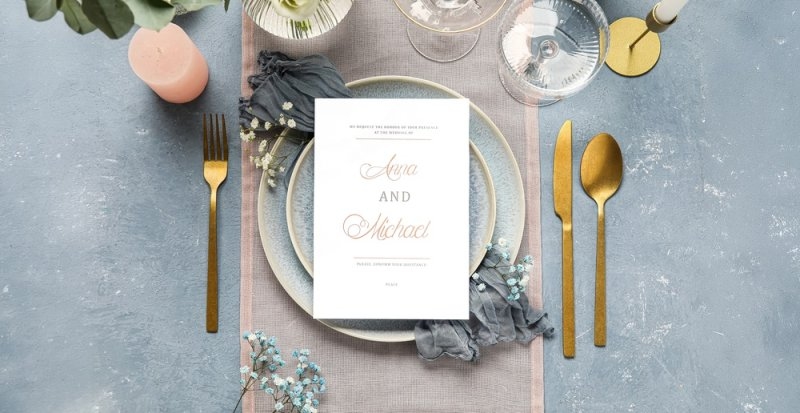
The wedding invitation is an essential element of the wedding planning. The way you draft it, plan it, and design it actually reflects the visual persona of your lifestyle and attitude. Hence, you must learn how to send a wedding invitation to your loved ones.
Beyond classic choices, today's top design trends highlight tactile blind embossing, minimalist scribble-style line art, and rich dark moody color palettes (like deep emerald, espresso, and burgundy) that make stationery feel like a modern keepsake.
If you are planning to get married but do not know about the wedding invitation etiquette, let us help. Be with us in this article and get to know about the top 10 wedding invitation etiquette rules that you should never forget.
1. What is the right time to send the invites?
A traditional wedding invitation reaches its destination six to eight weeks before the wedding date. This is the ideal time that every wedding requires. If you are about to get married in a month or two, it’s high time to think about it.
Start planning and look for designs in advance so that at the end of last month, your wedding invitations are ready to ship. This actually comes up with a dual advantage.
Sending the wedding invites before 6 weeks of the wedding date helps your guests schedule their tasks and plan accordingly for the wedding. They can wrap up things and buy tickets (if flying for your wedding) to arrive on time.
Also Read: Benefits & Ideas for Wedding Invitations With QR Codes
2. What should be the deadline for RSVPs?
RSVP is the last date by which your guests can respond to the wedding invitation. The ideal RSVP date is at least one week before the wedding date.
However, your guests can respond as early as they can; maybe they can give you a call just after receiving the wedding invite. This can be done.
3. Where to include wedding website info?
Include standard URLs or scannable QR codes. The most modern approach is creating a hybrid invite suite by placing a clean QR code alongside a short link on your enclosure card.
This allows tech-savvy guests to jump directly to mobile-first RSVP forms, event schedules, and registry details, keeping your main physical card clutter-free and streamlining response tracking.
4. How to inform your guests about a dress code?
The right place to add information about the dress code is the upper right corner of the wedding invitation.
If you want your guests to attend your wedding in formal wedding attire or any particular dress code of your choice, make sure to add this information at the upper right corner of the wedding invitation.
Provide clear, visual cues. While traditional phrases like "Black Tie" or "Cocktail Attire" still work, 2026 etiquette leans into visual guidance. Consider adding short color palettes or mood board descriptors (e.g., "Garden Party Formal: Soft Pastels & Earth Tones") on your wedding website so guests know exactly what to wear.
5. Where to put the return address on wedding invitations?
The right place to write the return address is on the back flap of the envelope.
Here, keep one thing in mind: the return address printed on the back flap of the envelope should address the person who is responsible for responding to the received response cards, be it your parents or the wedding host.
Don’t Miss: 10 Wedding Invitations Etiquette Do's and Don'ts for Guests
6. Should you send the wedding reception invite to the immediate family members only?
You should not. If you do so, you actually show that you can bear their presence at the ceremony but are not willing to pay for their plate at the reception. Does it sound nice to you? It doesn't.
Hence, it would be better either not to invite a person whom you cannot afford at your reception or invite him for both the wedding ceremony and the wedding reception.
7. How do you handle plus-ones politely on the invitation?
Use intentional (and inclusive) addressing. Name all guests on the outside envelope in gender-neutral terms, e.g., “Mx. XXX,” or include full names, excluding "Sir," on the outside envelope to respect an individual's first choice of name.
On the inside card, use language to set boundaries (e.g., “We have 2 seats reserved for you”). In the RSVP section of the card, give them the exact number of seats that they have reserved (e.g., "We have reserved 2 seats in your honor") so that they do not bring additional guests.
Give them your explanation if they request to bring a guest to dinner without you saying so.
8. Should you include registry and gift information on the main card?
Registry information should never be printed on the actual invitation to the wedding; it can give the impression that this is a gift requirement. Rather, post a link to your registry openly on your marriage website or card details. Rather, post your registry link subtly on your marriage website or an enclosure card of points.
Or simply spread by word of mouth among close family and/or the wedding party.
9. How do you communicate an adults-only wedding reception?
For an adults-only gathering, refer to the adults by their names, instead of saying The Smith Family. A gracious statement on the RSVP card or note insert, such as "An adult reception will follow" or “We have reserved 2 seats in your honor,” is also fine.
If visitors ask about taking children, quietly let them know that this venue is limited or that the formal atmosphere of the evening is limited.
10. What is the standard way to list host names on the invitation?
The traditional host line is usually the party paying for or hosting the event, for example, the bride's parents, the parents of both, or the host/hosts; the couple.
When there is more than one person contributing money, a term such as "along with their families" is like an all-inclusive or modern term. No matter what format you decide on, make sure it's the same way throughout your invitation pieces!
Suggested Reading: Discover the Best Time Frame to Send the Wedding Invitations
The Takeaway
Wedding invitations say a lot. The wording used, the design chosen, and the manner in which you have used your guests’ names actually reflect how serious you are about your wedding and how willing you are to invite your loved ones. Hence, make sure you properly follow the wedding invitation etiquette.
Hope this works for you. Want to share your thoughts? Drop us a comment, and we will revert in no time.
Frequently Asked Questions
Which title to use on the invitation for a same-sex or non-binary couple?
Same-sex couples will often use full names (e.g., Mrs. Smith or Smith Smith) or alphabetical order by last name for their names. The modern usage of "Mx." and using the entire name of the guest/host without a title are gender-neutral options for non-binary participants.
Do you need to put rehearsal dinner or post-wedding brunch information on the invitation?
Oh no, definitely the main wedding invitation shouldn't be used to print pre-wedding or post-wedding events. No, don't add them to the main card, because it may confuse or make the uninvited guests feel marginalized. Do not include them on the main card; they are better off receiving their own insert card or dedicated card for the specific subsets of guests they are invited to.
How should you handle a guest who has broken up before the wedding?
Where the ex-partner is named specifically, this invitation cannot be accepted by someone else, and the guest cannot just replace their own personal invitation with another person's. At the same time, you can politely state that you have a limited seating capacity or that close friends/family are preferable.
What to do about a worded invitation where there's a death in the family?
If you want to mention a deceased parent on the invitation, use an appropriate and fragile tone: For instance, “Jane Smith, daughter of John Smith and the late Mary Smith.” Do not list the name of a deceased parent on the leading "host line" for the invitation; it should be a leading “host line” only for a living parent who is giving the invitation.
How to send an invitation to a vow renewal?
Invitations for the renewal of the vow typically go a bit less formal, with the couple usually being cited as the hosts (e.g., "Your presence to renew the vows is requested hereunder," "The pleasure of your company is requested," "Your company is requested to renew the vows," etc.). As there is no tradition of gifting for a renewal, you must let the couple know that no gifts are expected, or specify none at all on your wish list.
This content was created by AI


