Wedding Band vs. Engagement Ring: What is the Difference?


Key Takeaway
- Engagement rings are for the proposal—wedding bands are for the marriage.
- Engagement rings almost always have a center stone, and wedding bands usually keep things simple.
- Set aside separate budgets to keep the whole process easier.
- Try both rings on together before buying, and make sure they match in metal and style if you want a polished look.
- You don’t actually need both rings; pick what works for you.
Deciding between a wedding band and an engagement ring is one of those questions that comes up for almost every couple planning a proposal or a wedding. The numbers actually say a lot—according to The Knot’s 2025 Jewelry & Engagement Study, folks in the U.S. usually spend about $5,200 for an engagement ring. Wedding bands, on the other hand, tend to cost much less, since they rarely include a large center diamond or gemstone. The Gemological Institute of America puts it simply: engagement rings are all about that centerpiece stone, which is a huge price factor.
So, the difference between these two rings goes way beyond looks. They stand for different stages, traditions, and budget expectations. If you’ve ever wondered what really sets a wedding band apart from an engagement ring—or even asked yourself, “Do I need both?”—you’re definitely not alone. This guide breaks down the basics: what each ring means, what they look like, how much they cost, what is the difference between a wedding band and an engagement ring, wedding ring styles, engagement ring styles, types of wedding bands, how much should you spend on a wedding band, why are engagement rings more expensive than wedding bands, types of engagement rings, and how to wear them together. You’ll be in a much better spot to pick what fits you best.
What is a Wedding Band?
The wedding band is the ring you exchange during your ceremony. It stands for commitment and the ongoing partnership of marriage. Classic wedding bands are plain metal—gold, platinum, palladium, or titanium. Some people go for diamond bands, engraved details, or mixed metals, but generally, wedding bands are less showy than engagement rings.
Popular wedding band styles
- Classic gold band
- Diamond eternity band
- Half-eternity band
- Vintage styles with engraving
- Bands with a gentle curve to fit with an engagement ring
Wedding bands are made to take a beating, since people tend to wear them daily—so comfort and sturdiness matter here.
What’s an Engagement Ring?
People give engagement rings during proposals. It’s a ring that says, "I want to marry you." Engagement rings almost always feature a center diamond or gemstone, and the setting is made to show it off. They’re usually more eye-catching than wedding bands.
Popular engagement ring designs:
- Solitaire
- Halo
- Three-stone
- Pavé
- Vintage-inspired
- Bezel
Some designs sparkle more, some are safer for active hands, and the rest come down to your style and how much maintenance you like.
Difference Between Engagement Ring and Wedding Band
Here is the best guide to wedding bands vs. engagement rings, or if you want to learn the basic difference between an engagement ring and a wedding band:
| Feature | Engagement Ring | Wedding Band |
| Occasion of Giving | At the Proposal | At the Wedding |
| Primary Purpose | A Promise of Marriage | A Symbol of Being Married |
| Design | Usually Has a Diamond or Central Stone | Usually Simple or Plain |
| Cost | More Expensive | Less Expensive |
| Time of Wearing | Worn Until the Marriage Ceremony | Worn After the Wedding Vows Are Exchanged |
It's common to remove the engagement ring when you are working or something, but the wedding band is mostly on all the time.
Try This: How Do You Choose the Perfect Engagement Ring for Your Wedding?
Which Comes First Wedding Band or an Engagement Ring?
At the ceremony, people usually slip on the wedding band first so it sits closest to your heart, then stack the engagement ring above it.
That’s the tradition, anyway. These days, couples do whichever order feels best or looks nicest to them.
How to Wear A Wedding Band and Engagement Ring Together?
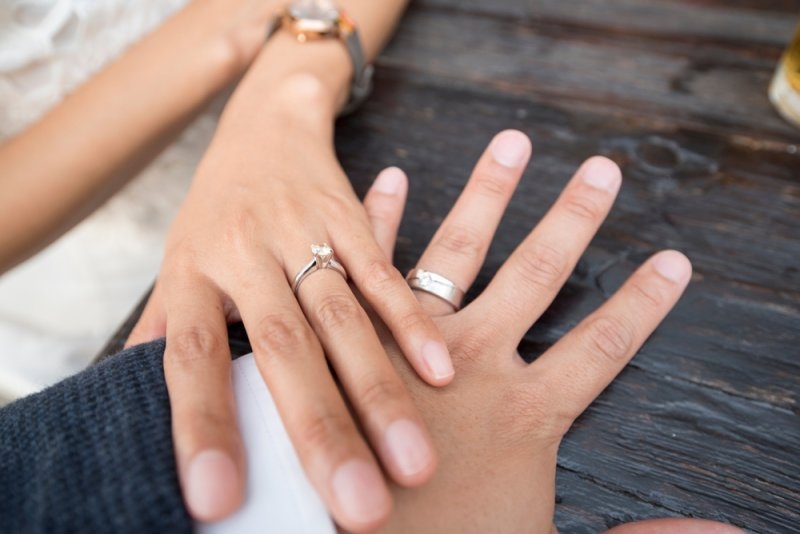
If you’ve got both rings, you’ll probably try a few ways before settling on your favorite.
- Traditional stack: You might stack the wedding band beneath the engagement ring
- Symmetrical stack: Double up on bands with the ring sandwiched in between
- Separate-hand style: Wear one ring on each hand. Matching the metals and profiles helps them sit nicely together.
Wedding Band vs. Engagement Ring Cost
Most people spend a lot more on the engagement ring than the wedding band. The main reasons? Engagement rings include pricier stuff like a big center stone, more detailed work, extra diamonds, and often, a brand premium. Wedding bands usually keep things more straightforward.
| Ring Type | Estimated Price Range |
| Simple Gold Wedding Band | $200–$1,000 |
| Diamond Wedding Band | $800–$3,000+ |
| Solitaire Engagement Ring | $1,500–$6,000+ |
| Designer Engagement Ring | $5,000–$20,000+ |
Men's Wedding Band vs. Engagement Ring
Traditionally, men only wear a wedding band, but some couples are switching things up and picking engagement rings for men too. Popular materials for men’s bands are:
- Yellow
- White gold
- Platinum
- Titanium
- Tungsten
- Black zirconium
The lines are blurring, but wedding bands still rule for most men.
Choosing a Wedding Band
Function is just as important as looks with a wedding band.
- If you want something that’ll last through decades of wear, think about durability: platinum is strong but pricey, gold is classic and easy to resize, and titanium is super tough.
- Softer metals will show scratches more quickly. Try on a few widths—wider bands feel bold, but thinner ones are lighter.
- And if you’re active, a low-profile, no-stone band is the practical choice. Comfort-fit interiors can make a world of difference if you’re not used to wearing jewelry.
Choosing an Engagement Ring
Here, it’s about personal style, but also thinking ahead.
- Round diamonds flash the most, while shapes like oval or emerald cuts stand out more.
- Settings matter too—bezel and six-prong styles hold stones more securely if you use your hands a lot.
- Also, consider if the ring will work with a straight band or if you’ll need something custom-shaped to fit around it.
Are Engagement and Wedding Rings the Same?
In short: no. An engagement ring is about the promise, the “will you marry me?” The wedding band is the public “I do.”
Lots of people wear both, but you don’t have to—pick what works for your life and priorities.
Top Wedding Ring and Engagement Ring Styles for 2026
Right now, thin yellow gold and slim diamond eternity bands are hot for wedding rings. Platinum and mixed metals are on the rise, too.
Engagement rings? Oval solitaires, hidden halos, vintage details, and east-west stone settings are everywhere. The good news: these popular styles are also pretty timeless.
Wrapping It Up
Understanding the wedding band vs. engagement ring comes down to purpose, design, and timing. An engagement ring is proposal bling and will shine in more glory than your wedding ring; wedding bands are sealing the union at your ceremony—whether it’s a simple gold band, a diamond eternity, or a stacked set, the bling is down to you, your style, and your story.
Take your time, try things on, and remember—what matters most is that you love wearing it.
FAQs
What Finger Do You Wear an Engagement Ring On?
In the U.S. (and lots of other places), the engagement ring goes on your left hand’s ring finger. That tradition started way back, tied to the (mistaken) idea that a vein runs straight from that finger to your heart. After the wedding, the wedding band slips onto the same finger, usually below the engagement ring.
Do You Need Both a Wedding Band and an Engagement Ring?
Nope. Plenty of couples pick just a wedding band for comfort, simplicity, or budget reasons. Others want both because each ring marks a different moment. It’s totally up to you.
What are the Most Popular Wedding Band Styles for Women?
Plain gold, pavé diamond bands, full or half eternity bands, vintage engraving, and contoured shapes that fit snugly around an engagement ring are all big favorites—thin yellow gold and platinum eternity bands look great with pretty much every engagement ring.
Can You Upgrade Your Engagement Ring After Marriage?
Absolutely. Couples upgrade for anniversaries, career milestones, or the birth of a child. People swap in bigger stones or fancier settings—or even redesign their original band into a custom set.
Is It Better to Buy A Matching Bridal Set or Separate Rings?
A matching set is easy—everything lines up and fits together. Going with separate rings means you get to mix and match styles, but you’ll want to check for a comfortable fit, especially if the rings will be worn stacked daily. Either way works; it's just a matter of what you prefer.
This content was created by AI


