How to Preserve a Wedding Dress and Keep it Beautiful?


You spent months finding it. You probably cried when you said yes to it. And then the wedding happened in a blur of vows, champagne, and dancing until your feet gave out. Now it is sitting in a bag somewhere, and you are not sure what comes next.
What most brides do not realize until it is too late is that the first two weeks after the wedding matter more than anything else for the gown's future. Knowing how to preserve a wedding dress correctly and acting fast is the difference between a dress that looks just as beautiful in 30 years and one that has gone yellow and brittle in a closet. This guide walks you through everything you need to know.
Why Should You Preserve a Wedding Dress?
The reasons to preserve a wedding dress go deeper than most people expect, and the most important one has nothing to do with sentiment.
After a full wedding day, your gown has absorbed body oils, sweat, champagne, and food residue that are completely invisible to the naked eye. In storage, these compounds oxidize and turn yellow or brown. Six months is often all it takes for this process to begin, and once those stains appear, they are usually impossible to fully remove.
There is also the financial side. The average American bride spends over $2,000 on her wedding dress. Spending a fraction of that on proper wedding dress care to protect it makes practical sense. And for many brides, the biggest motivation is legacy. A well-preserved gown can be passed down to a daughter or granddaughter. Without proper care, that option disappears quietly over time.
Act Within 1 to 2 Weeks: This Cannot Wait
Every wedding dress care specialist will tell you the same thing: the longer you wait, the worse the outcome. Most brides pack the gown away after the wedding, fully planning to deal with it once life settles down. That gap stretches from days into weeks into months, and stains that were straightforward to remove at day 14 have now bonded permanently with the fibers.
Delicate fabrics like lace, satin, and silk organza are especially unforgiving. Once an oxidized stain settles deep into a lace weave, even the best professional cleaner cannot fully reverse it.
Until you are ready to send the dress out, hang it on a padded hanger inside a breathable fabric garment bag. Never plastic. Keep it away from direct sunlight, humidity, and temperature swings. Do not attempt to spot clean it yourself, as you risk driving the stain deeper before a professional even sees it.
Also check: Elegant Corset Wedding Dress Styles for Timeless Romance
How to Preserve a Wedding Dress: The Professional Process
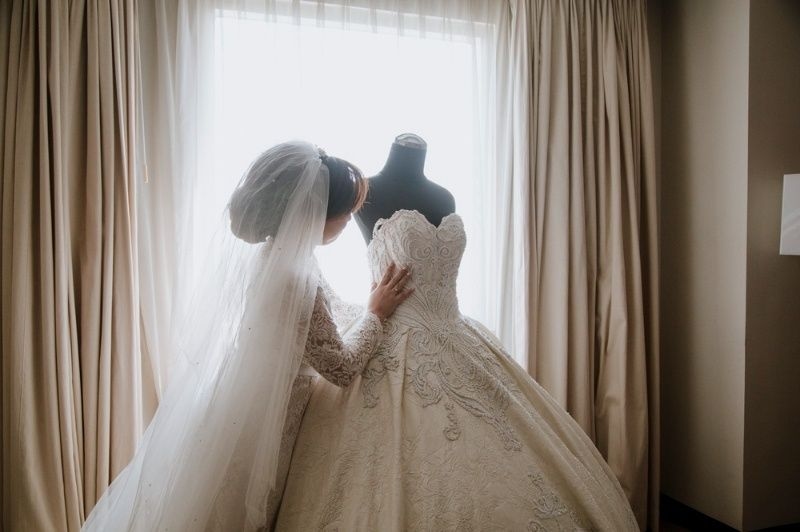
Understanding how to preserve a wedding dress professionally helps you ask the right questions when comparing services.
- Inspection comes first. A specialist examines the gown under bright light, mapping every stain, including invisible ones, identifying fabric types, and noting any loose beading or damaged seams.
- Cleaning is the most critical step, and the method depends on your fabric. Chiffon and organza are dry-cleaned only. Satin is typically dry-cleaned or gently hand-washed. Tulle handles a careful hand wash with soap flakes but should never be wrung. Lace and heavily beaded gowns should always go to someone with specific experience in those materials.
- Repair follows cleaning. Loose threads, missing buttons, and any embellishment damage are addressed while the fabric is clean and accessible.
- Packaging is the final step. The dress is folded with acid-free tissue paper cushioning every fold, then placed in an archival storage box that blocks dust, light, and moisture while allowing just enough airflow to prevent mildew.
When choosing a service, ask about their anti-yellowing guarantee, their insurance coverage, and whether they clean gowns in-house or ship them elsewhere. Many local dry cleaners outsource to the same national facilities that mail-in specialists use but charge a higher price for the convenience.
DIY Preservation: When it Works and When it Does Not
DIY preservation is a reasonable option for simpler gowns with light staining, but it carries real risks. The wrong product on silk can permanently dull the fabric to a grayish tone. Heat near beaded embellishments can warp or melt them in ways that cannot be undone.
If you go this route, inspect the dress under bright light first. Clean according to your fabric type. Once fully dry, fold the gown using only acid-free tissue paper between each layer. Store it in an acid-free box designed for long-term textile use. Regular cardboard releases acids that break down fabric over time. Colored tissue paper transfers dye. Plastic bags trap moisture. None of these belong near a wedding dress meant for long-term storage.
Storage Conditions That Make or Break a Gown
Proper wedding dress care does not end once the gown is boxed up. Where you store it matters just as much as how it was cleaned.
A bedroom closet or under-bed space in a climate-controlled room works well. Attics and basements are consistently the worst choices because of humidity swings, temperature changes, and pests. Even light filtering through a closet door can accelerate yellowing over time, so true darkness is best.
Avoid hanging the dress long-term. A full gown left hanging for months or years stretches and distorts at the shoulder seams and bodice. Flat storage in an archival box is always better for the long haul. Every year or two, refold the dress with clean hands to prevent permanent crease lines and check for any signs of moisture or discoloration.
More to Discover: Pre-Wedding Hair Care Tips for Picture-Perfect Bridal Locks
Wedding Dress Preservation Cost: What to Expect in 2026?
Wedding dress preservation costs in 2026 typically fall between $300 and $500 for most brides. Basic cleaning without archival packaging runs $200 to $300, while premium services for couture, heavily beaded, or vintage gowns can reach $750 or more.
One thing worth knowing: local dry cleaners often charge a markup because they are outsourcing to the same national facilities you could contact directly. Going straight to a preservation specialist usually gives you better value and a clearer picture of exactly who is handling your dress and how.
Frequently Asked Questions
Is it too late to preserve my dress if it has been over a year?
It is not too late, but results depend on how much oxidation has already occurred. Some stains from this stage can be reduced but not fully removed. A reputable specialist will inspect the gown and give you an honest assessment before any payment is required.
What happens if I open the sealed preservation box?
Opening the box exposes the gown to oxygen, which can restart the yellowing process. Most archival boxes include a small viewing window so you can check on the dress without breaking the seal. If you do open it, have the dress professionally re-sealed before returning it to storage.
Can a colored or non-white wedding dress be preserved the same way?
Yes, the process is largely the same. Colored fabrics can be more sensitive to certain cleaning solvents, so the inspection stage matters even more. Let your preservationist know the fabric type and any dye details upfront so they can choose the safest cleaning approach for your specific gown.
This content was created by AI


